The sword
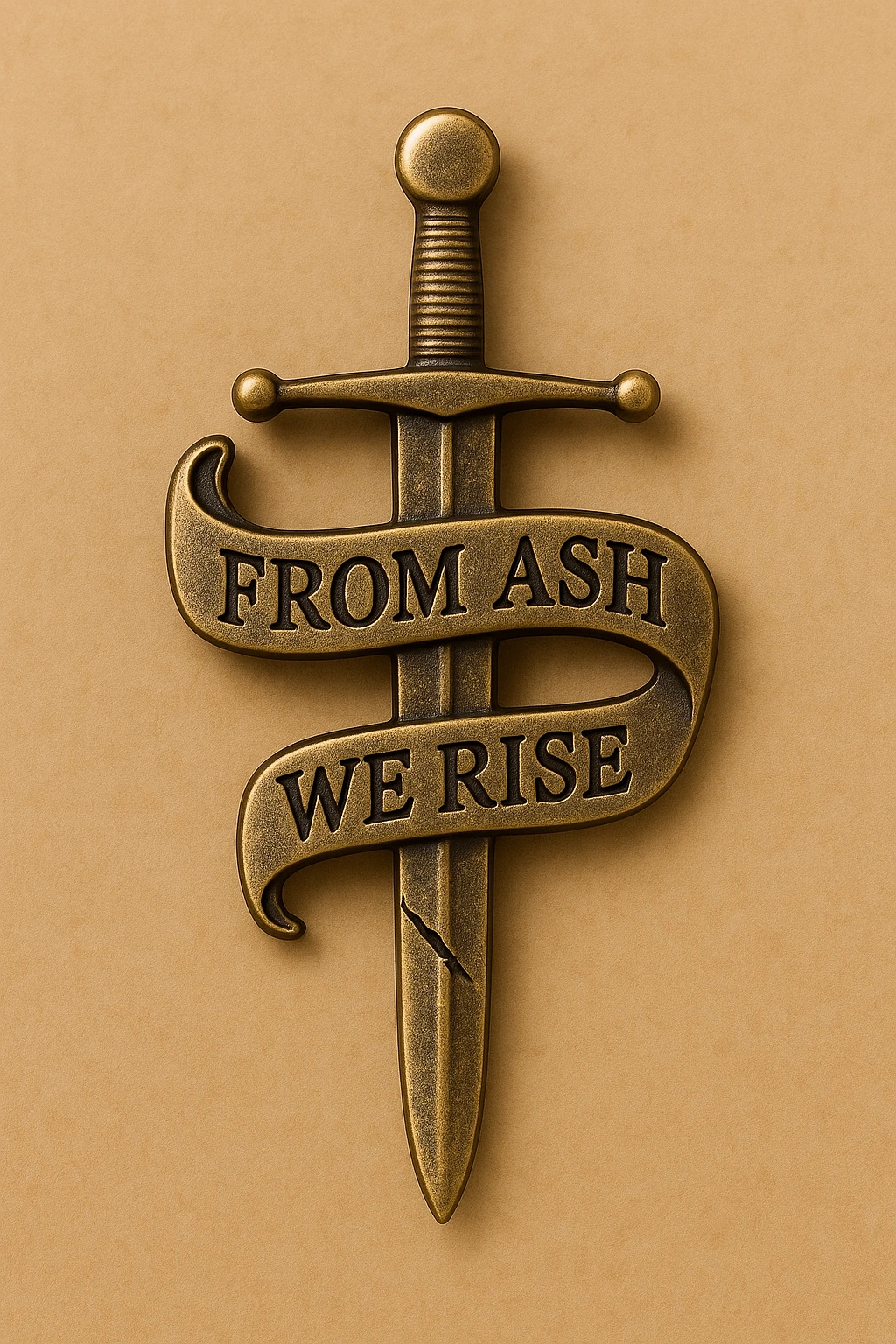
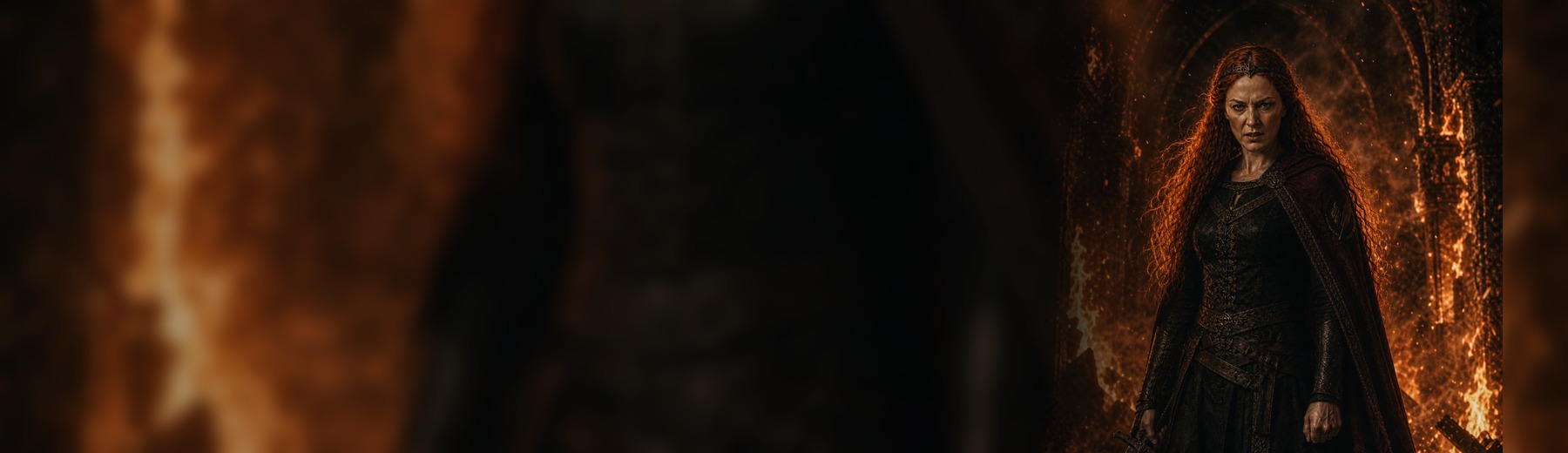
Begun in her father’s forge from scrap, remade over years and scarred by use. Ashborn was valuable to Evelyne because it had been broken and made useful again.
The dark mare
Not a parade horse. Seal is remembered as compact, intelligent, difficult with strangers and utterly attuned to Evelyne.
The people who turned back
Displaced fighters, servants, scouts, healers, runaways and survivors — people the powerful were accustomed to treating as expendable. They became a Guard because protection had to last longer than one battle.
Fire, sword, feather, broken ring
The language of the Guard: destruction, endurance, memory and the choice to become more than what broke you.
The commander
The man who could challenge Evelyne and remain beside her. He is remembered without polishing away the complications between them.
A home made after loss
The later estate and Guard Hall become a place where the company stops being only a fighting force and begins becoming a community.
Not an army looking for a war.
The Guard grew from the people left behind by other people’s victories: displaced soldiers, servants with nowhere safe to return to, scouts, healers, runaways, horsemen, labourers and survivors of burned settlements. Some could fight. Some could mend a wound, carry a message, shoe a horse, find a safe road or make a room ready for somebody who had lost everything.
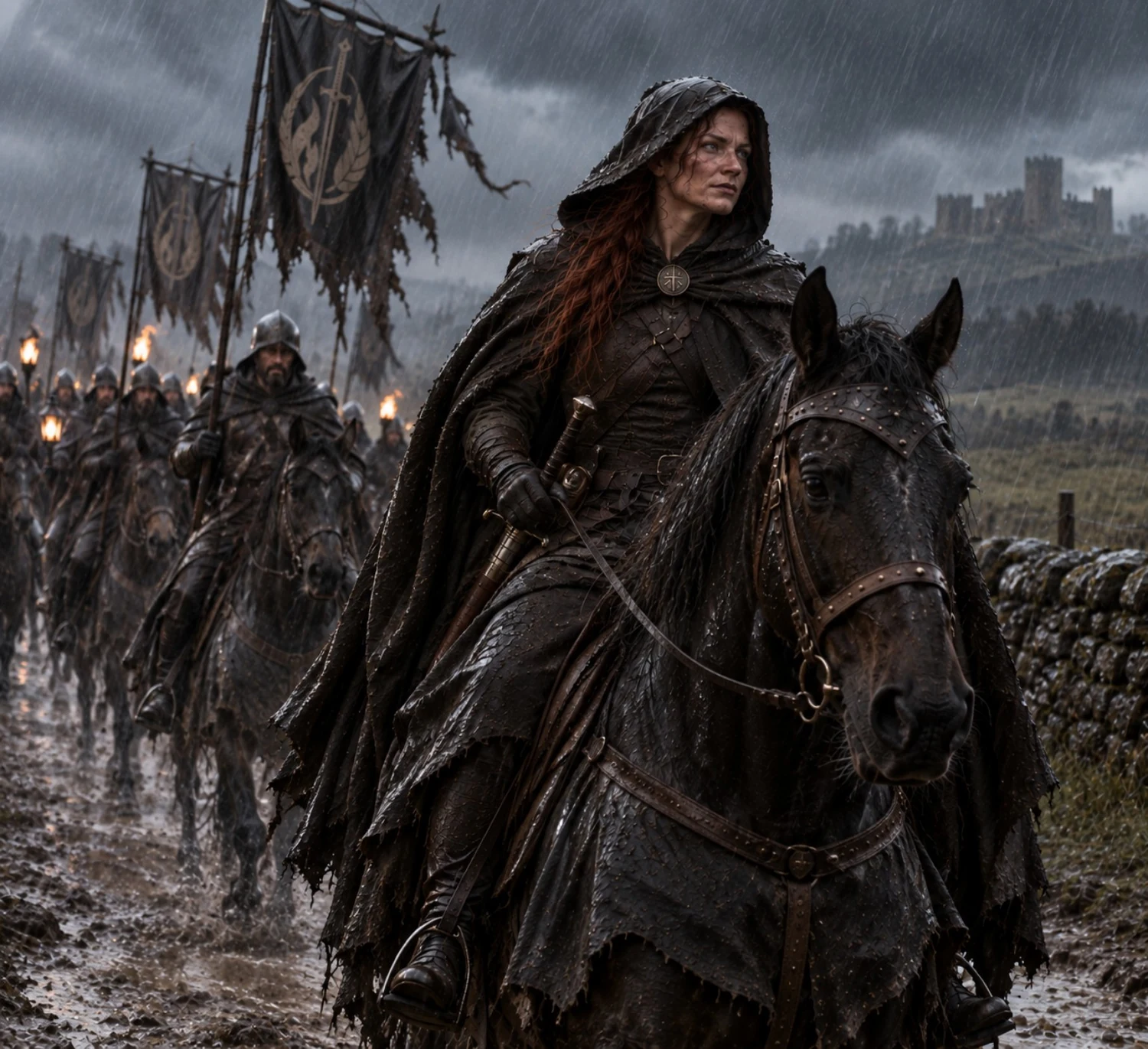
They did not gather because Evelyne gave one magnificent speech and everybody swore themselves to a legend. They gathered because she and Rael kept doing something rarer: they turned back. They returned for the wounded. They carried bodies home. They protected ordinary people from supposed allies as readily as from enemies. They stayed after the exciting part was over. And when the weather turned ugly, they did not automatically stop. Evelyne made foul-weather work ordinary: wet leather, poor visibility, mud under hoof and cold hands were conditions to train for, not surprises to complain about.
Because winning the fight was not enough.
Evelyne had already learned what a commander could destroy by mistaking fury for judgement. The Guard grew from that failure as much as from her victories. Its rules were meant to stop courage becoming another excuse for cruelty.
The wounded are not left.
Speed, pride and the timetable come second when somebody under their protection cannot simply be abandoned.
The dead have names.
Bodies are recovered where possible. Families are faced. Loss is not turned into an attractive number in a victory story.
Protection applies to allies too.
A uniform, banner or friendship does not excuse abuse. Servants, camp women and civilians are protected from the Guard’s own side as well as its enemies.
Food and payment are shared fairly.
Loyalty is not bought with grand speeches while somebody lower down the line goes hungry.
A commander can be wrong.
Evelyne’s authority does not depend on pretending she never failed. The Guard survives because mistakes must be admitted, learned from and challenged.
They turn back.
The clearest difference is the simplest: when somebody is left in the ashes, the Guard does not automatically ride on.
Evelyne and Rael. Equals.
Rael was never Evelyne’s deputy, keeper or sensible man assigned to control the difficult woman. The Guard was built around two equal command instincts. Evelyne read the immediate danger in front of her and had an instinctive feel for what men and horses could still do in foul weather. Rael saw routes, supply, forecasts, numbers and what happened after the charge.
They argued. They corrected one another. Either could be wrong. That mattered. The Guard’s strength was not blind obedience to a heroine; it was the belief that even the person at the front had to answer to the people beside her.
Not because Evelyne never fell. They followed because she divided fairly, returned for the wounded, recovered bodies, faced families, protected the powerless from friends as well as enemies, admitted when she was wrong — and kept turning back.
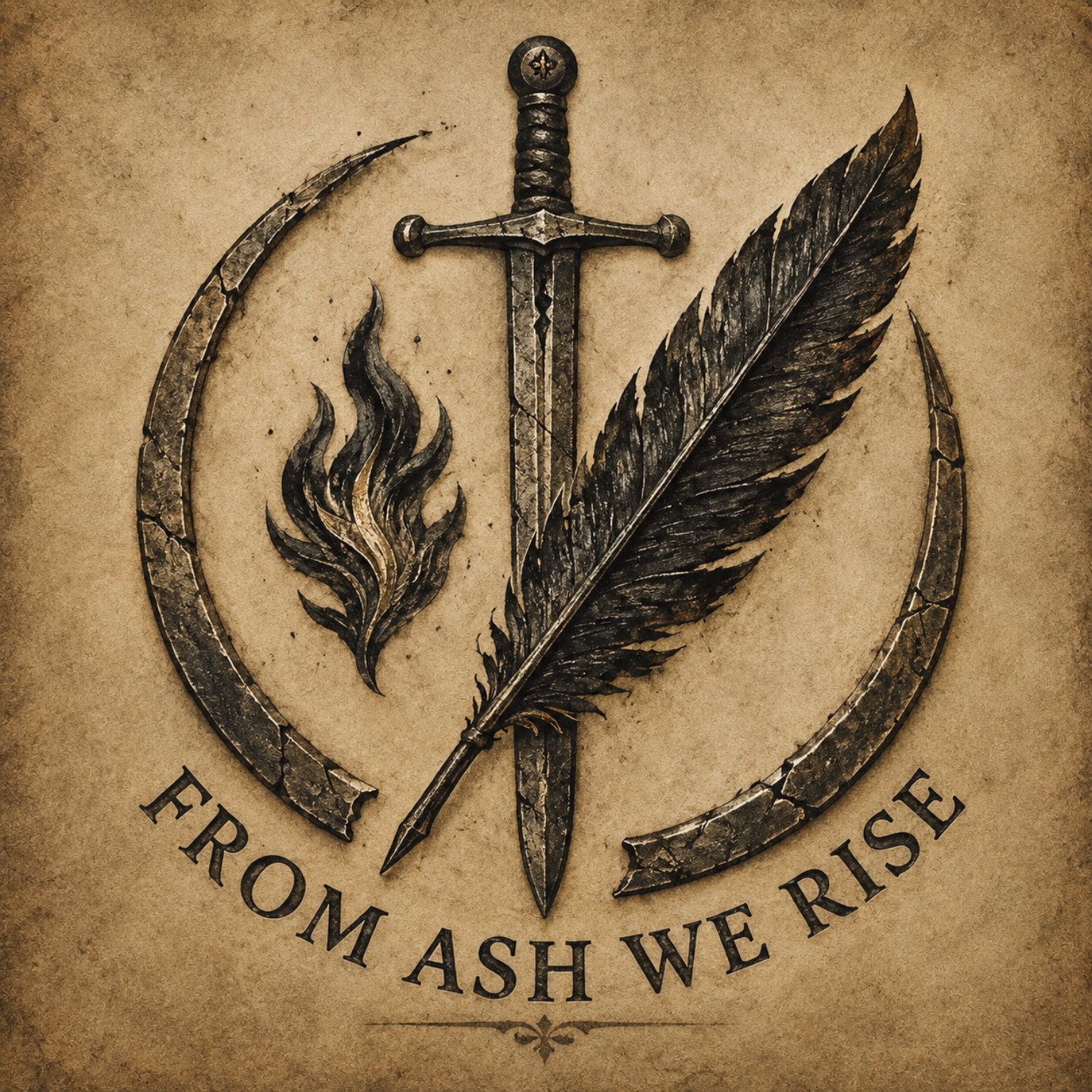
The Ashen Guard crest
The crest is not a claim of purity. It is a record of damage: the scarred blade, the dark feather, fire and the broken circle reforged into something that can still hold.
From Ash We Rise was never meant to mean that fire was good. It meant the fire did not get the final word.
The mark was not a medal for the undefeated. Quite the opposite. It belonged to people who knew what it meant to be broken, displaced, frightened, grieving or wrong — and who chose what they would become afterwards.
Harper’s Thunder.
By then, Evelyne’s preference for foul weather was already part of her reputation. The phrase did not begin as magic. In the older telling, it began with sound: the low, rhythmic rumble of Seal — Evelyne’s dark mare, whose name is linked to the Old English sealh, willow — and Ashen Guard horses approaching through bad weather, sometimes mistaken for thunder before the riders could be seen.
Later generations turned that practical memory into folklore. Ordinary thunder meant a storm was coming. Harper’s Thunder meant somebody had done something foolish, cruel or arrogant enough to bring consequences riding toward them.
The saying grew larger than the woman. The habit behind it did not: Evelyne preferred the storm because she had learned how to use it.
They laughed too.
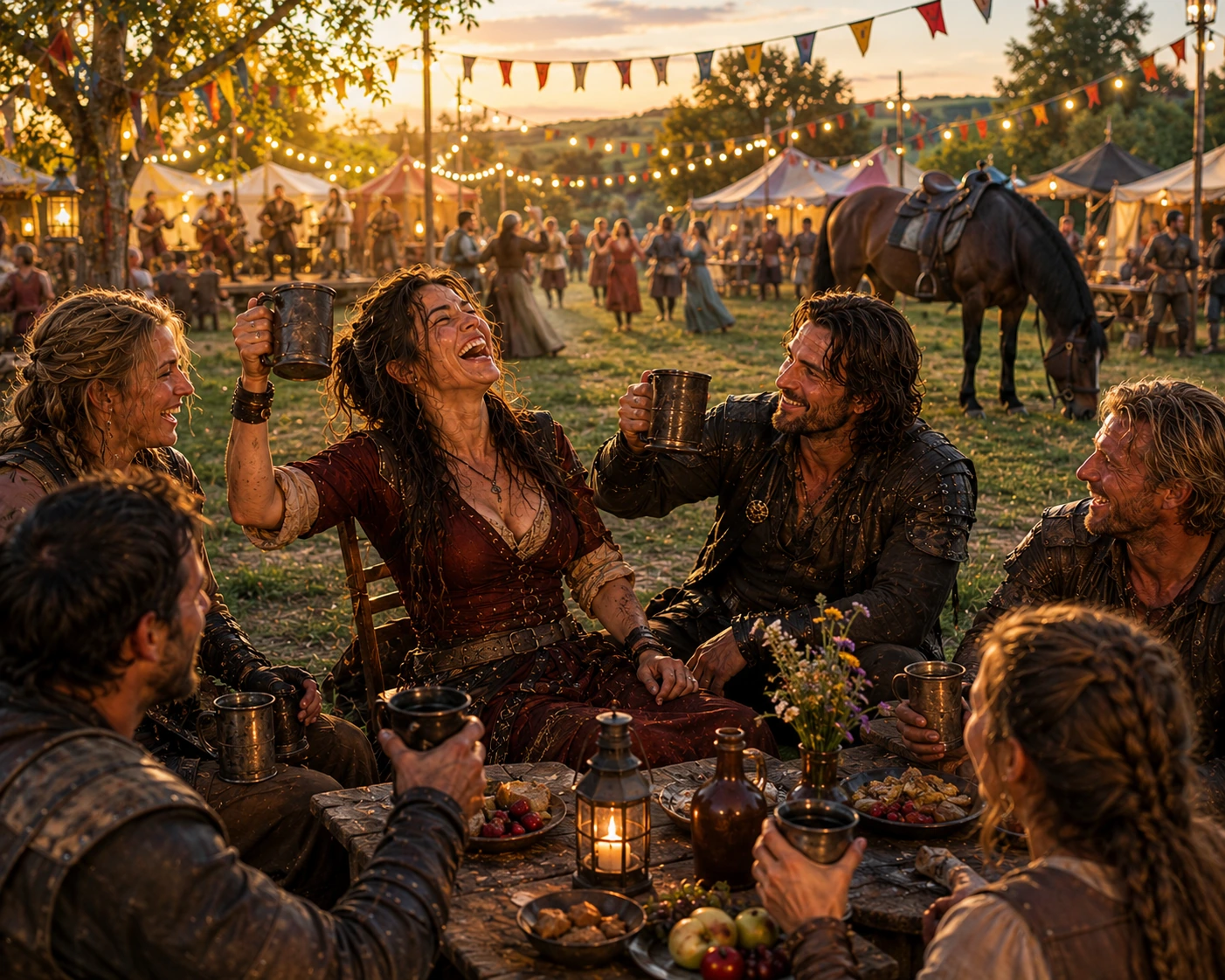
Later retellings turn the Guard into permanent warriors standing in rain and fire. That misses half of them. A company that survives together also eats together, argues over stupid things, sings badly, repairs tack, teases its commanders, tends the sick and finds reasons to laugh when nobody has earned an easy day.
The Guard was supposed to protect ordinary life. It therefore had to contain ordinary life.